


Queen Elizabeth’s Horse Wins Historic Gold Cup At Royal Ascot
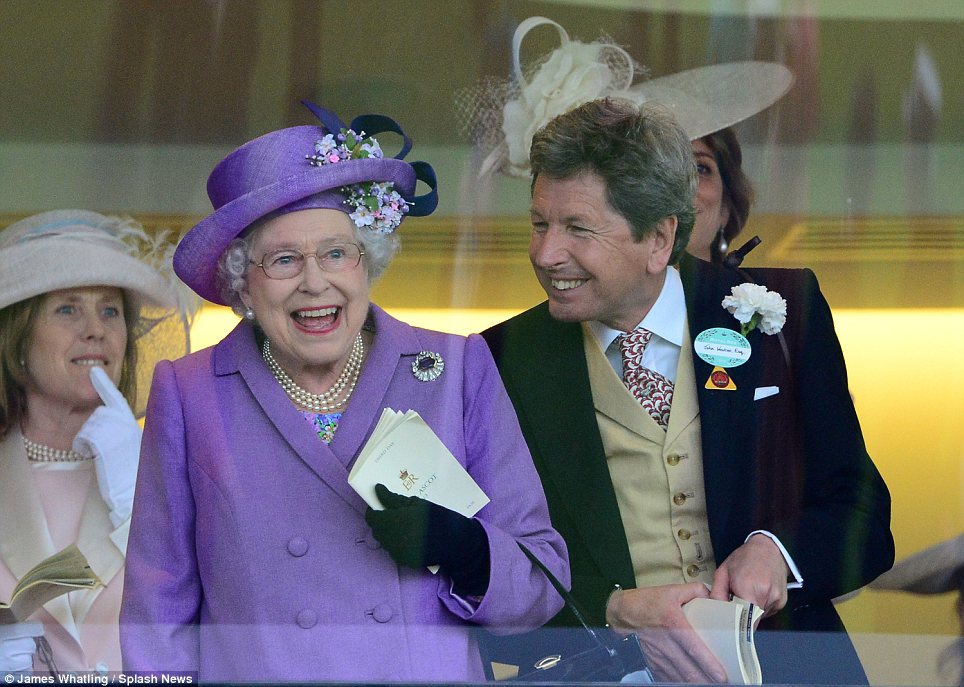
A beaming Queen Elizabeth II received the Gold Cup trophy on Thursday after becoming the first reigning British monarch in history with a winning horse in Royal Ascot’s biggest race.

The 87-year-old queen watched joyously as, Estimate, her much-fancied young filly crossed the finish line.
The queen, who has been on the throne for 61 years, has attended Ascot every year since 1945. Thursday’s win was her 22nd overall at Ascot, but the first in the signature Gold Cup.
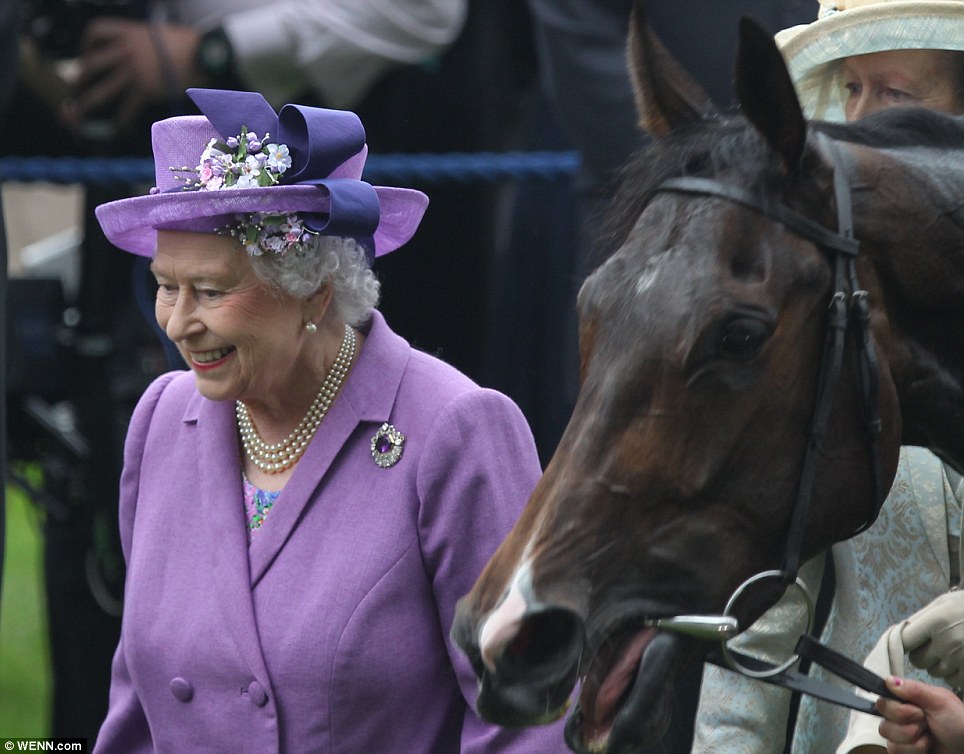
The Queen joins with her horse, Estimate, in the Winners Enclosure, a first for a reigning monarch in the race’s 207-year history.
The horse-loving queen is widely respected as an expert on horse breeding and racing.
According to the BBC, the queen has won various races at Ascot at least 21 times, the first, famously, came just two weeks after her 1953 Coronation when her horse, Choir Boy, won the Hunt Cup.

The 87 year old Queen Elizabeth II joins with jockey Ryan Moore as they celebrate winning the Gold Cup

Queen Elizabeth II is presented the Gold Cup by her son Prince Andrew, duke of York, after her horse “Estimate” wins.

Estimate, the Queen’s winning filly
~~~



Memorial Day ~ Lest We Forget

~~~

~~~

On thy grave the rain shall fall
from the eyes of a mighty nation.
Thomas William Parsons

~~~

From these honored dead we take increased devotion
to that cause for which thy gave
the last full measure of devotion …
that we here highly resolve
that these dead
shall not have died in vain.
Abraham Lincoln

~~~
Former BLM Mustang Escorts Fallen Marine To Arlington Cemetery

~~~
His name was Marine Sgt. Trevor Johnson, a young Marine who was killed by a roadside bomb while serving in Afghanistan.
He was a fifth-generation boy from Montana who grew up riding horses, herding cattle and mending fences.
When the young soldier was laid to rest at Arlington National Cemetery in Virginia on a cold winter day, a symbol of the fallen soldier’s ranching roots helped to escort him there.
Lonesome, a horse donated to The Old Guard’s caisson platoon from the Montana Bureau of Land Management lead the caisson that carried Johnson’s casket.
Lonesome was born at a Bureau of Land Management (BLM) holding facility in Butte, Montana on Oct.12, 1995. As a young foal, he was freeze marked, a white identity mark that is clearly seen, today.

Lonesome was eventually adopted by Mark Sant, a BLM Archeologist. Sant soon learned that Lonesome was exceptional in many ways. He was smart, strong and had a great personality.
When Mark Sant heard the Old Guard was looking for large black mustangs for their Caisson Platoon, he could think of no greater honor than donating Lonesome to be a part of that prestigious team.
Lonesome, the stunning black mustang of the Caisson Platoon, has since participated in hundreds of funerals as well as the funeral for former President Ronald W. Reagan, and the 55th Inaugural Parade.
Lonesome has turned out to be a wonderful ambassador for the BLM’s Wild Horse and Burro Program as well as a beautiful, well-trained and loved member of the Third Army’s Caisson Platoon.

How the horse came to assist in the interment ceremony for Marine Corps Sgt. Trevor J. Johnson at Arlington took some initiative by Mark Sant. Although he had never met Johnson, he wanted the Marine’s family to have a symbol of the state as they mourned the loss of a loved one so many, many miles from home.
Mark Sant e-mailed the office of Montana Gov. Brian Schweitzer to seek help finding Lonesome – the horse Sant had donated to the military several years ago.
An Aide for the Governor contacted the Montana National Guard, which in turn contacted the 3rd U.S. Infantry Regiment, or Old Guard, which assists in burial services at Arlington National Cemetery.
It’s not a request the Old Guard hears often, but one that was easy to oblige, said Major Steven Cole. “It’s stories like this that show the depths of care that all Americans have for their service men and women,” Cole said.
Cole further stated that to his knowledge, Lonesome is the only mustang from Montana.

Lonesome, front left lead horse
Just as Marine Sgt. Trevor took the lead in the battlefield, Lonesome took the lead on that day in Arlington Cemetery.
A Montana-grown horse carried the body of one of Montana’s brave soldiers.
~~~
References:
DC Military
Bureau of Land Management
Bureau of Land Management
Last Photo: Adam Skoczylas


 Simply Marvelous Horse World